Reading
Worldly Wisdom
Every book here is one I’ve read — which means the list is incomplete, and always changing. The name is borrowed from Charlie Munger, who called the latticework of ideas across disciplines “worldly wisdom.”
Updated
Rationality
How judgment fails and how it can be repaired. Munger put psychology first because every other discipline is read through a mind with predictable flaws.
-
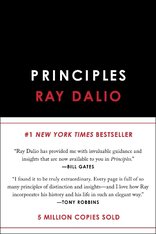
Principles. Simon & Schuster, 2017.
Bridgewater’s founder on making decisions as repeatable systems. The sections on radical transparency are the hardest to practice and the most useful.
-
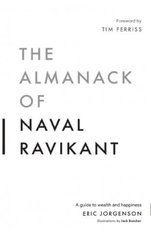
The Almanack of Naval Ravikant. Magrathea Publishing, 2020.
Naval’s tweets, talks and interviews on wealth and happiness, collected and edited by Eric Jorgenson.
-
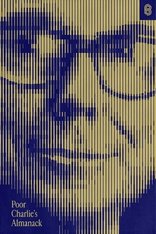
Poor Charlie’s Almanack. Edited by Peter D. Kaufman. Stripe Press, 2023.
Munger’s talks and essays, including his speech on the psychology of human misjudgment. This page takes its name from him.
Mind
The instrument itself: attention, memory, emotion, and the range of ways a human brain can be built.
-
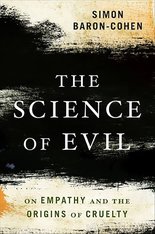
The Science of Evil. Basic Books, 2011.
Argues that cruelty is best understood as a loss of empathy, and maps the brain circuits involved.
-
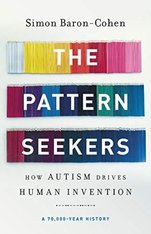
The Pattern Seekers. Basic Books, 2020.
Argues that the if-and-then reasoning behind human invention is the same trait that runs strongest in autism.
-
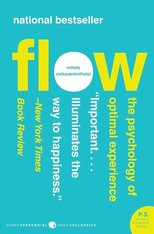
Flow. Harper & Row, 1990.
Research on complete absorption in a demanding task, and the argument that this state, more than pleasure, makes a life good.
-
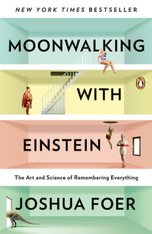
Moonwalking with Einstein. Penguin Press, 2011.
A journalist covering the U.S. Memory Championship trains for a year and wins it. The techniques are ancient, and anyone can learn them.
-
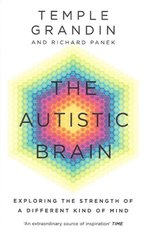
The Autistic Brain. Houghton Mifflin Harcourt, 2013.
Temple Grandin on the neuroscience of her own autism, and on the different ways autistic minds think: in pictures, patterns, or words.
Philosophy & Self-Command
How to conduct a life. The Stoics and their descendants, and anyone else worth reading on what to do when it is hard.
-

Meditations. Translated by Gregory Hays. Modern Library, 2002.
A Roman emperor’s private notes to himself on duty, death, and self-command, never meant for publication.
-
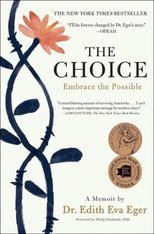
The Choice. Scribner, 2017.
An Auschwitz survivor, later a psychologist, on how she stopped living as a prisoner of what happened to her.
-
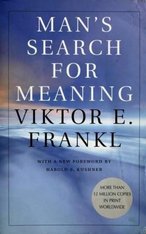
Man’s Search for Meaning. Beacon Press, 1959.
A psychiatrist’s account of the camps and the therapy he built from them: people can endure almost anything if they have a reason to.
-
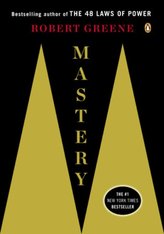
Mastery. Viking, 2012.
How mastery is built, traced through the apprenticeships of figures from Leonardo to Darwin.
-
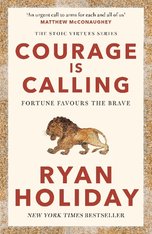
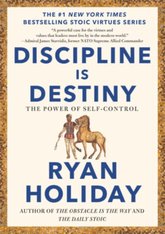
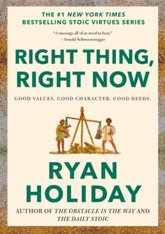
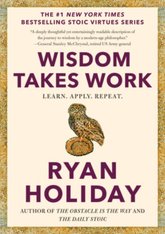
The Stoic Virtues. Four volumes: Courage Is Calling, Discipline Is Destiny, Right Thing, Right Now, Wisdom Takes Work. Portfolio, 2021–2025.
Four books, one for each classical virtue: courage, temperance, justice, and wisdom. Each makes its case through the lives of people who practiced it.
-
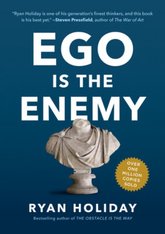
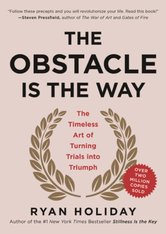
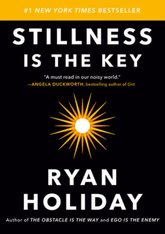
The Way, the Enemy, and the Key. Three volumes: The Obstacle Is the Way, Ego Is the Enemy, Stillness Is the Key. Portfolio, 2014–2019.
Three short books applying Stoicism to working life: how to use obstacles, how to keep ego out of decisions, and how to think clearly under pressure.
History & Human Nature
Where the species came from and what it repeatedly does, from evolution to recorded history.
-
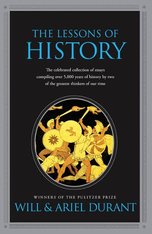
The Lessons of History. Simon & Schuster, 1968.
About a hundred pages distilled from the Durants’ eleven-volume history, on the patterns that repeat across five thousand years.
-
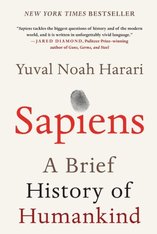
Sapiens. Harvill Secker, 2014.
Argues that humans came to dominate the planet because they could cooperate in large numbers around shared fictions: gods, nations, money.
-
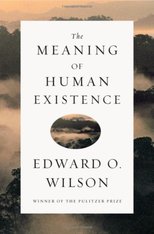
The Meaning of Human Existence. Liveright, 2014.
The biologist who founded sociobiology on what evolution can and cannot tell us about human purpose.
Sovereignty & Power
Who rules, by what right, and what happens when people build outside that authority. Political thought from the state’s side and from outside it.
-
A Declaration of the Independence of Cyberspace. Electronic Frontier Foundation, 1996.
Written in a night, addressed to the governments of the industrial world, telling them they had no sovereignty where we gather. The founding claim that the network is its own country.
-
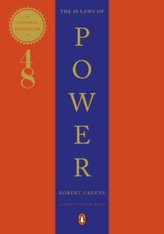
The 48 Laws of Power. Viking, 1998.
Three thousand years of statecraft and court intrigue reduced to rules. Most useful for recognizing these moves when someone uses them on you.
-
A Cypherpunk’s Manifesto. Cypherpunks mailing list, 1993.
Defines privacy as the power to reveal oneself selectively, and argues it will be defended with code rather than law. The cypherpunks’ founding text, 1993.
-
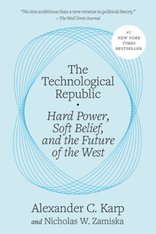
The Technological Republic. Crown Currency, 2025.
Palantir’s co-founder and CEO argues that Silicon Valley abandoned national defense for consumer apps, and should return to it.
-
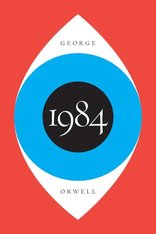
1984. Secker & Warburg, 1949.
On surveillance, and on how controlling language controls what people are able to think.
-
Guerilla Open Access Manifesto. Self-published, 2008.
Argues that locking academic research behind paywalls is a moral wrong and that sharing it is a duty. Swartz was arrested three years later for acting on it, and died in 2013 before trial.
Law & Consequence
How societies decide guilt, punishment, and repair, and what that machinery does to the people who pass through it.
-

Writing My Wrongs. Convergent Books, 2016.
Written by a man who served nineteen years for murder, seven of them in solitary, and came out to mentor others.
-
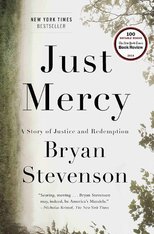
Just Mercy. Spiegel & Grau, 2014.
Stevenson’s cases defending the condemned in Alabama, including Walter McMillian, sentenced to death for a murder he did not commit.
-

Hillbilly Elegy. Harper, 2016.
Vance’s memoir of growing up between Appalachian Kentucky and a declining Ohio steel town, written years before he entered politics.
Money & Markets
What money is, how capital moves, and why systems built on both keep breaking.
-

Boom. Stripe Press, 2024.
Argues that speculative bubbles, for all their waste, are how societies fund large leaps such as the Manhattan Project and Apollo.
-
Bitcoin: A Peer-to-Peer Electronic Cash System. Self-published, 2008.
The nine-page 2008 paper that proposed Bitcoin: electronic cash with no bank or government in the middle, secured by proof of work.
-

VC: An American History. Harvard University Press, 2019.
A Harvard Business School historian traces venture capital from nineteenth-century whaling to Silicon Valley.
Entrepreneurship & Startups
Making something that did not exist and getting it to survive. Founding, operating, financing, and the people who did it before.
-

The Cold Start Problem. Harper Business, 2021.
How networked products get their first users, reach a tipping point, and stall. By the former head of rider growth at Uber.
-
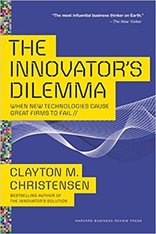
The Innovator’s Dilemma. Harvard Business School Press, 1997.
Why good companies fail by doing everything right. Listening to their best customers is what blinds them to the technology that replaces them.
-
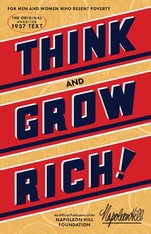
Think and Grow Rich. The Ralston Society, 1937.
The 1937 book that started the genre: definite purpose, belief, and persistence. The style has dated more than the advice.
-
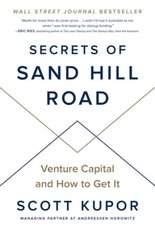
Secrets of Sand Hill Road. Portfolio, 2019.
How venture capital works from the inside: fund structure, how partners get paid, and what each clause of a term sheet means. By a longtime managing partner at a16z.
-
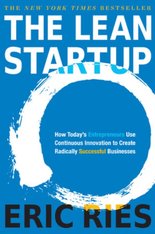
The Lean Startup. Crown Business, 2011.
Treats a startup as a series of experiments: build the smallest thing, measure it, learn. Much of the vocabulary founders use today comes from here.
-
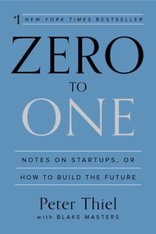
Zero to One. Crown Business, 2014.
Based on Thiel’s Stanford course: build something new rather than compete in a crowded market, and aim for a monopoly.
-
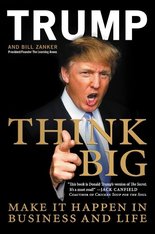
Think Big. HarperCollins, 2007.
Written in 2007, before politics: his own account of how he does business.
Progress & Techno-Optimism
Whether things get better, and what it would take. The optimist case beside the risks it has to survive to be right.
-
The Techno-Optimist Manifesto. Andreessen Horowitz, 2023.
A 2023 essay arguing that technological growth is the main source of human flourishing, and that slowing it is a moral failure.
-
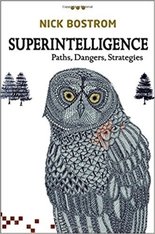
Superintelligence. Oxford University Press, 2014.
The 2014 book that made AI risk a serious subject, centered on how to control a system smarter than its makers.
-
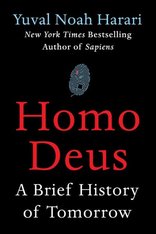
Homo Deus. Harvill Secker, 2016.
The sequel: what happens to humanist values when algorithms know us better than we know ourselves.
-
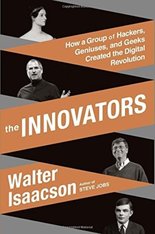
The Innovators. Simon & Schuster, 2014.
The history of computing from Ada Lovelace to Google, told through teams rather than lone inventors.
-
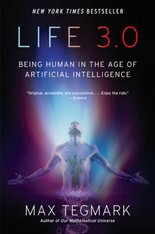
Life 3.0. Knopf, 2017.
A physicist sets out the possible outcomes of artificial general intelligence, from utopia to extinction, and what can be decided now.
Lives
Biography, read for what it teaches. Munger called it making friends among the eminent dead.
-
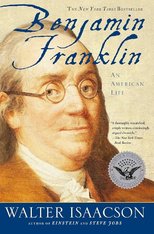
Benjamin Franklin: An American Life. Simon & Schuster, 2003.
Franklin as printer, scientist and diplomat, and as the first American to treat his own character as a project.
-
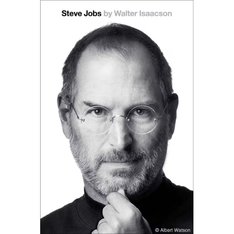
Steve Jobs. Simon & Schuster, 2011.
The authorized biography, written with Jobs’s cooperation and without his editorial control. Uncompromising taste, and the will to bend reality.
-
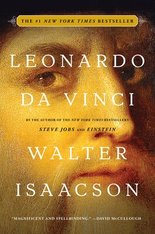
Leonardo da Vinci. Simon & Schuster, 2017.
Isaacson’s case is that Leonardo’s genius was curiosity and observation practiced every day, which anyone can imitate.